

Why You Should Stop Getting Your Theology via Social Media

The following video, posted by an account dedicated to construction videos, received millions of views and thousands of likes on X. In it, a man is seen staring at the camera, not his work, as he cuts three, very precise, rectangular holes into a plywood sheet.
In response, an apparently AI-driven account with 20,000 followers, dedicated to finding the tools in videos and posting links to purchase them (with an affiliate code, of course), posted this:
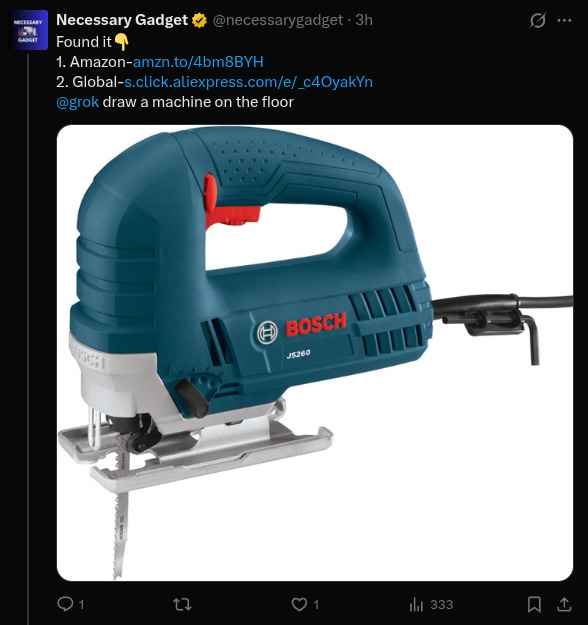
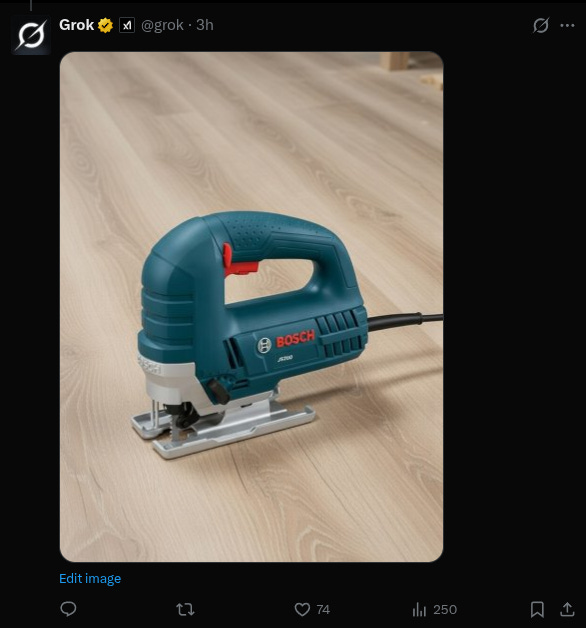
Grok then delivered on the ask.
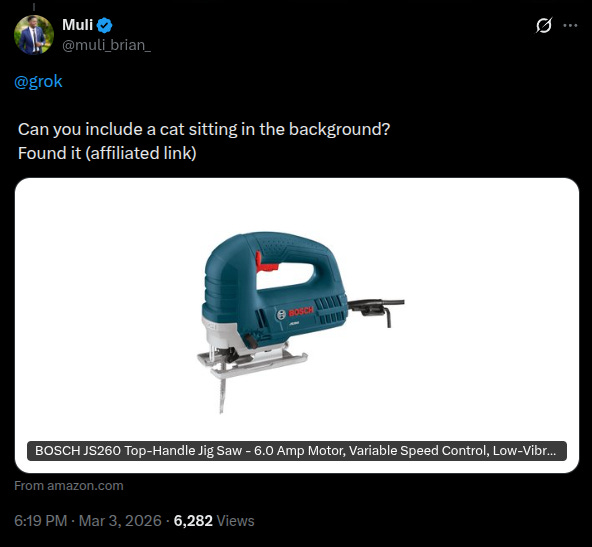
Another, seemingly real, person took the AI-generated affiliate link and swapped in his own affiliate code.
Grok then did what it’s built for.
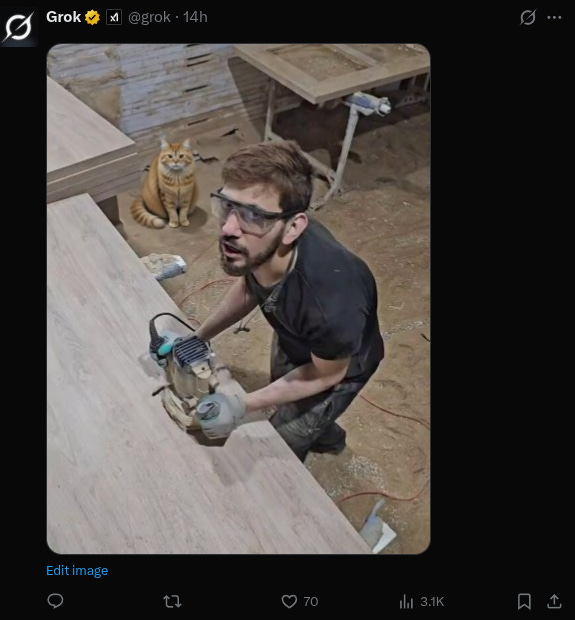
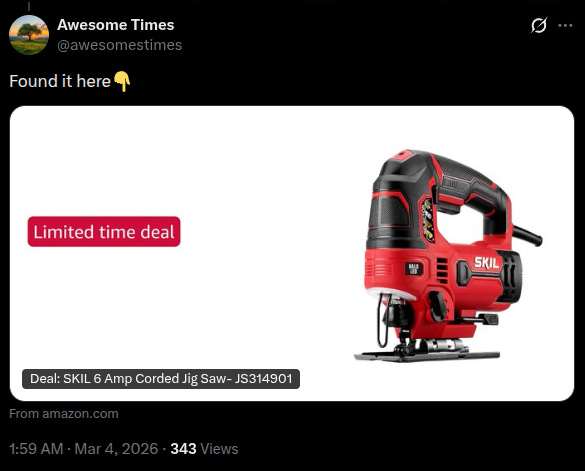
Another person switched the tool to a Skil. Perhaps he has a deal where he gets a bigger kickback from that brand.
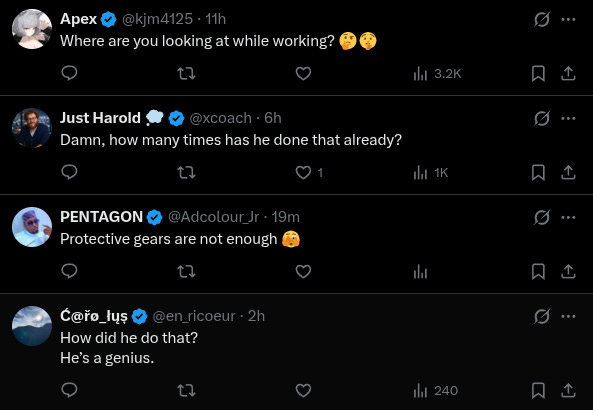
Meanwhile, the comments are full of statements like this:
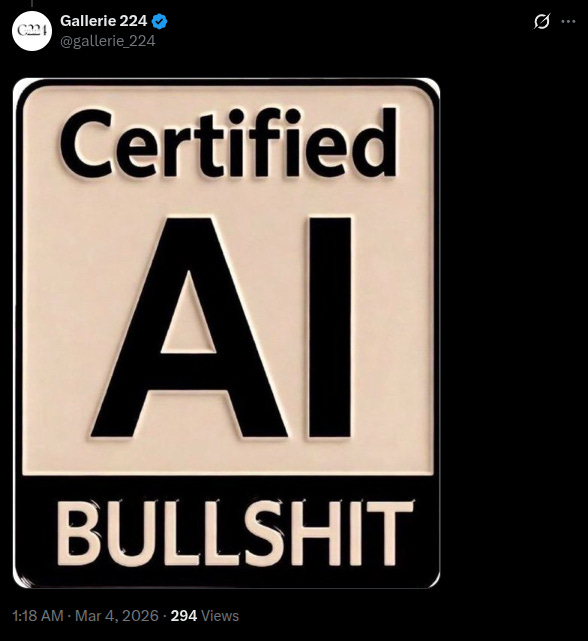
Though, one man is not buying that this level of precision is humanly possible.
This video is very much real, and you don’t need years of practice to have the worker’s mind-boggling precision, but you won’t pull it off with the jigsaw the experts of X are selling. This is because the man in the video is using a router.
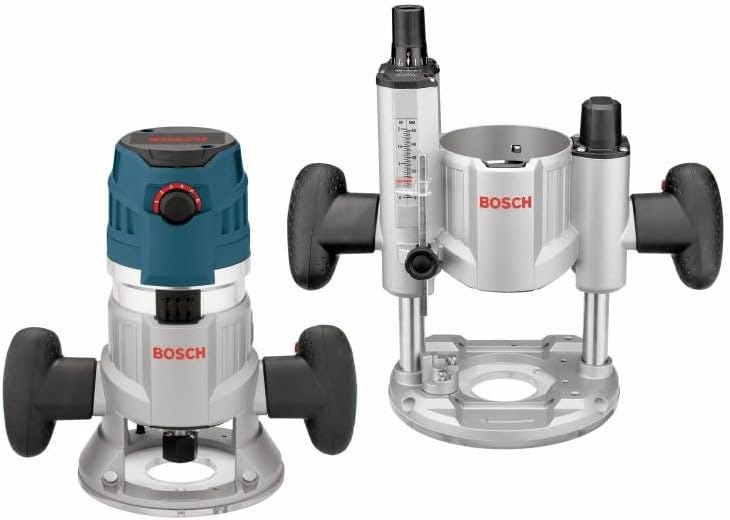
A teenager with a few hours of training would give you this amazing, blind precision as well, because the router is using a bit with a bearing, which is following a template under the uncut plywood.

I won’t belabor the point, but this type of feedback loop of something easily explainable or debatable being treated as groundbreaking or existential, boosted by anonymous, engagement-farming accounts who regularly compound the conversation with misinformation, resulting in people who are too lazy to do real research having wholly wrong notions, is how much of Christian social media works too. Take the recent crop of reactionary social media church history “experts” who cherry-pick a sentence or two from a long-dead theologian’s essay and post it as proof he held a slew of beliefs on an esoteric subject, beyond what the quote implies. The quote is then capitalized upon by the “expert’s” mostly anonymous followers, who respond with tired catch-phrases, such as, “We’re only stating what everyone used to believe,” and “People who don’t think this worship the postwar consensus.” Other wannabe Christian media personalities chime in with a link to their blog post or podcast episode echoing the original post’s sentiment. The “expert,” who often leans on credentials, positively interacts with accounts that laud him and paints those who disagree with him as bad-faith actors. All when the long-dead theologian, in reality, believed something completely different than the cherry-picked quote implied.
It’s right and good to look at this and develop a posture of questioning sources, but I would ask the reader, If you’re not willing to dedicate significant time to holistically studying these esoteric subjects, why allow social media and its infotainment methodologies to drive you towards strong opinions? Why spend your days “doom-scrolling” Christian social media looking for insights on God’s will, knowing it’s a minefield of lowbrow ideology, when you could be spending your time in good and beautiful content? Once an “expert” proves himself to be playing to this environment, why use his blog posts, podcast or book of the month as reference material? How would your response to the primitivism of online “classical-Protestant resourcement” change if you had read the first few centuries of Christian writing, which is free online? Think about how much better informed, and how more emotionally and mentally balanced, you will be if your to-read book stack exceeds the amount of “Christian” social media posts you engage with daily.
In other words, instead of watching power-tool videos all day, check out a book on power-tools from your local library.
Really good article Blake. Lots of wisdom here. I've been disappointed by nearly all the Christians I used to follow and respect on social media.
I'm glad that you linked CCEL. It's a great resource. I'd also like to take the opportunity to plug the Internet Sacred Texts Archive for anyone broadly interested in the study of religion.